

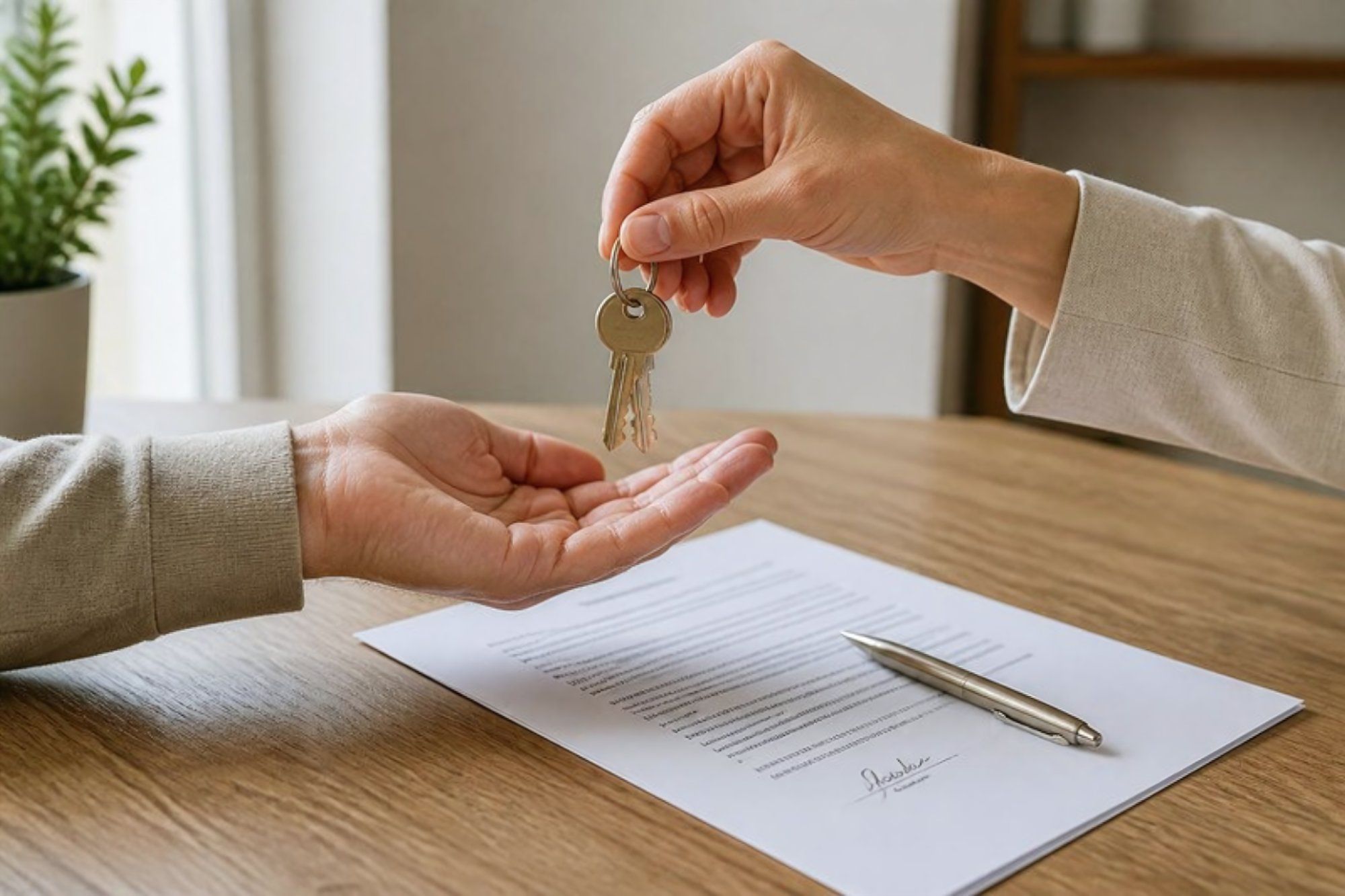
As a Hungarian, and therefore an EU citizen, you can buy property in Spain on exactly the same terms as a Spanish buyer. You need no special permit, and buying does not oblige you to live there. Even so, the process differs from Hungary: contracts come in a different order, the notary plays a different role, and there are a few Spanish particularities worth knowing in advance.
The sequence below follows a typical resale apartment purchase on the Costa del Sol. New-builds have their own payment schedule, which we cover in our guide to new-build and off-plan property on the Costa del Sol.
1. Preparation: budget, purpose, power of attorney
Before you reserve anything, settle three things:
- Your total budget, not just the price. For a resale property in Andalusia, plan for roughly 9% on top of the price (7% transfer tax plus fees); for a new-build, considerably more. Our article on purchase costs works through a real example.
- What the property is for. If you plan to let it, say so before the search starts, because tourist-licence rules vary by town and by building.
- Power of attorney (poder notarial). You don't need to be in Spain for every step. With a notarised power of attorney, your Spanish lawyer can handle the NIE, the bank account and even the signing. In Hungary it can be granted at the Spanish consulate, or before a Hungarian notary with an apostille. Think carefully about its scope: grant no more powers than the job requires.
2. NIE number and Spanish bank account
The NIE
The NIE (Número de Identidad de Extranjero) is the tax identification number for foreigners in Spain. Without it you cannot sign a notarial deed, pay taxes or set up utility contracts.
You can apply in Spain at the police foreigners' office, or in Hungary at the consular section of the Spanish Embassy, using form EX-15 and paying the related fee (form 790, code 012). A lawyer can also apply on your behalf with a power of attorney.
Appointments for the NIE can take weeks to come through in some places. Start the process while you are still browsing. If you are buying as a couple, each of you needs your own NIE.
The Spanish bank account
You will use a Spanish account to pay the price and the taxes, and later the local property tax (IBI), community fees and utilities. As a non-resident you open a non-resident account, for which the bank needs confirmation that you are not tax resident in Spain. Typically you will be asked for your passport, NIE, and evidence of income and of where the money comes from.
Spanish anti-money-laundering rules mean the source of any significant sum must be documented. If you are converting from forints, include exchange and transfer costs in your budget.
3. Reservation (reserva)
Once you have found the property, a short reservation agreement (contrato de reserva) takes it off the market. The deposit is usually a few thousand euros and counts towards the price. It is usually paid into your lawyer's client account or the agency's escrow account, not directly to the seller. At this stage you are not yet committed to the whole purchase, but you can lose the deposit if you walk away without good reason. So make sure the agreement states that the deposit is refundable if the legal checks uncover a problem.
4. Due diligence: what your lawyer checks
This is the most important part of the process, and it is the job of your own independent lawyer, not the seller's or the agent's. The main points:
| What is checked | Why it matters |
|---|---|
| Land registry extract (nota simple) | Who owns it, any mortgage, embargo or easement |
| Cadastre (catastro) | Whether the size and buildings match reality |
| Building and occupancy permits | Whether the building and every addition (terrace, pool, enclosed area) are legal |
| Planning status | Especially for villas: no irregular construction, AFO status |
| Community fees and IBI arrears | Debts can stay attached to the property, so certificates are needed |
| Energy performance certificate | Mandatory, and a clue to running costs |
| Tourist licence (if any) | Whether it can continue and whether the building allows it |
On the coast it is common for a terrace to have been glazed in later, or for a pool to be missing from the permits. That can cause problems when you sell, borrow or insure. Your lawyer compares the cadastre, the registry and what is actually there.
5. The private contract: arras
After due diligence comes the private purchase contract, the contrato de arras. The most common form is arras penitenciales (under Article 1454 of the Spanish Civil Code). The logic is simple:
- you typically pay 10% of the price at this point;
- if you pull out, you lose that amount;
- if the seller pulls out, they must pay you back double.
The contract sets the deadline for signing at the notary (often a few weeks away), what is included in the price (furniture, parking, storage) and that the property will be handed over free of charges. If you are buying with a mortgage, this is where to agree what happens to your payment if the loan is refused.
6. Notary and completion
The deed of sale (escritura pública de compraventa) is signed before a notary by buyer and seller, or their attorneys. You pay the balance at this point, usually by banker's draft or direct bank transfer, and you receive the keys.
Two Spanish specifics:
- If the seller is not resident in Spain, the buyer must withhold 3% of the price and pay it to the Spanish tax authority as a payment on account of the seller's capital gains tax. Your lawyer handles this, but you should know about it, because the seller receives less on the day.
- The municipal land value tax (plusvalía municipal) falls on the seller by law. Your lawyer checks that it is dealt with.
7. Taxes, registration and first tasks
After signing, the transfer tax (7% ITP on resale property in Andalusia) must be paid within the legal deadline, and the deed is then entered in the land registry. That is what makes you the owner as against third parties. Utilities and the IBI are then moved into your name.
| Step | Indicative timing |
|---|---|
| NIE and bank account | a few days, or a few weeks depending on NIE appointments |
| Reservation to arras (due diligence) | 1 to 3 weeks |
| Arras to notary | typically 4 to 8 weeks |
| Land registry entry | a few weeks after signing |
First tasks after you get the keys
- transfer the utility contracts (electricity, water) and internet into your name;
- set up direct debits for IBI and the rubbish charge from your Spanish account;
- register with the community's administrator (administrador de fincas) and set up the community fee direct debit;
- take out buildings and contents insurance;
- appoint a local tax agent (gestor) for your non-resident tax returns, which are due from the first year.
Five common mistakes to avoid
- Paying a reservation without a lawyer's review. The reservation agreement is short, but without a refund condition your money is at risk.
- Starting the NIE late. If your NIE isn't ready by the arras, the whole timetable can slip, and your deposit with it.
- Budgeting only for the price. In Andalusia, the full cost of a resale home is roughly 9% above the price.
- Sharing a lawyer with the seller. An independent lawyer represents you; if the seller or developer recommends one, ask about conflicts of interest.
- Checking letting rules after the fact. If you plan to let, the licensing position must be clear before you reserve, not after you get the keys.
Monvero guides you through the process in Hungarian: we help with the search and the negotiation, coordinate with an independent Spanish lawyer, and you receive a Hungarian summary of every key document. Our legal adviser, Dr. Georgina Gősi, follows the process on the Hungarian side. See our buyer representation page or get in touch.
This article is general information and not legal advice. For any specific transaction, the opinion of an independent Spanish lawyer prevails.
Frequently asked questions
Do I need to travel to Spain to sign?
Not necessarily. With a notarised power of attorney, your lawyer or another appointed person can sign for you. Many buyers still like to be there for the handover, but it is not required.
How long does the whole process take?
If your NIE and bank account are in place, reservation to keys typically takes six to ten weeks. The most common delays come from NIE appointments and gathering documents.
Can we buy together as a married couple?
Yes. The deed records each owner's share. That matters for tax, because Spanish non-resident tax is filed per owner.
Do I need a Spanish lawyer if the notary checks things anyway?
It is strongly recommended. A Spanish notary is responsible for a lawful signing but does not carry out full due diligence on your behalf. Checking permits, debts and planning status is your lawyer's job.
What if the seller is a foreigner who is not resident in Spain?
The process is the same with one difference: at the notary you must withhold 3% of the price, which your lawyer pays on account of the seller's capital gains tax. It is worth stating this in the arras contract so the seller knows in advance.
A second home in Spain?
NIE, lawyer, notary, taxes: in 30 minutes we walk through what lies ahead and what you can already sort out from home.
Let's talk
Dr. Gősi Georgina is Monvero's legal advisor. She looks after contracts, legal due diligence and the legal side of tax questions. This article is for general information; for advice on your own situation, get in touch.