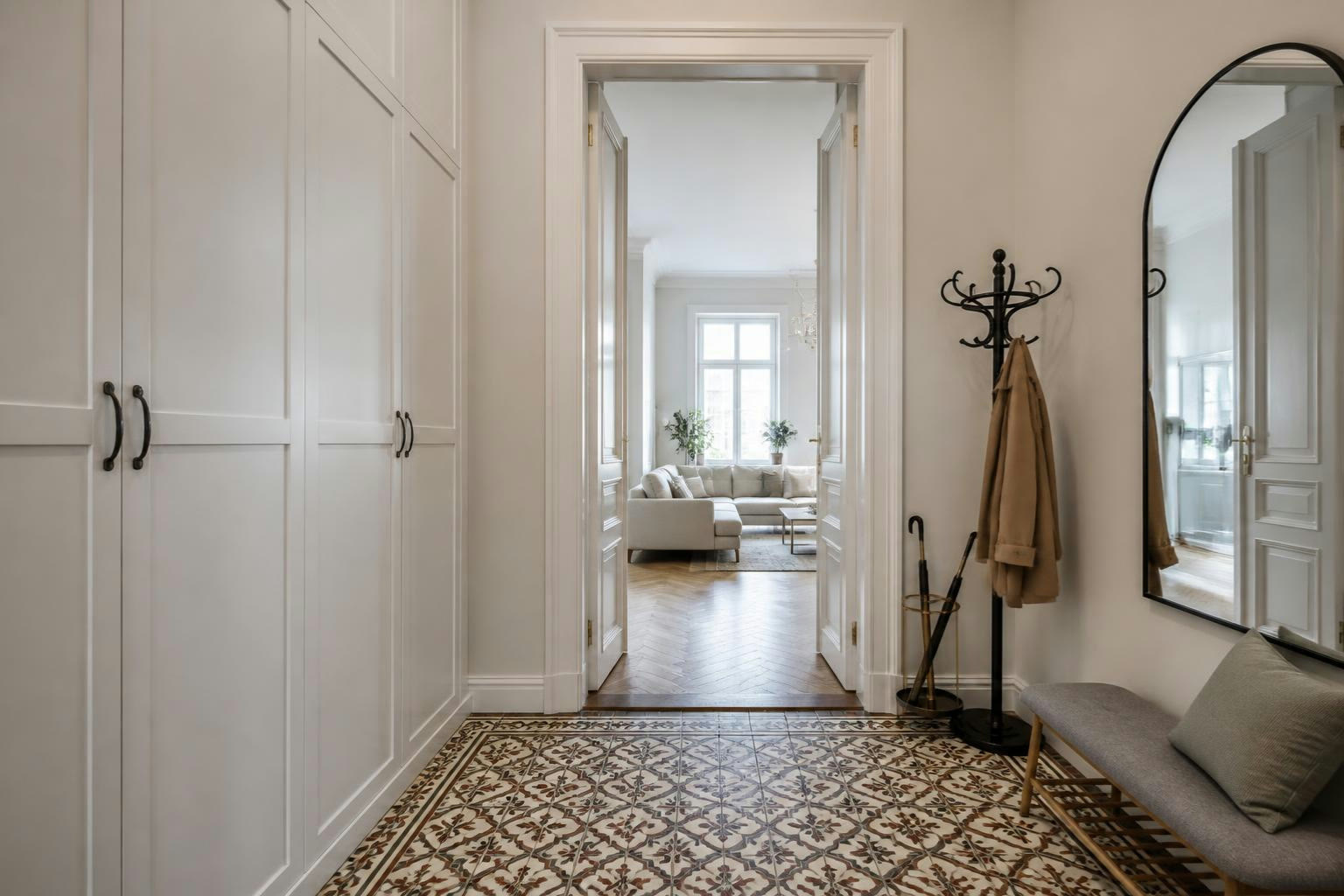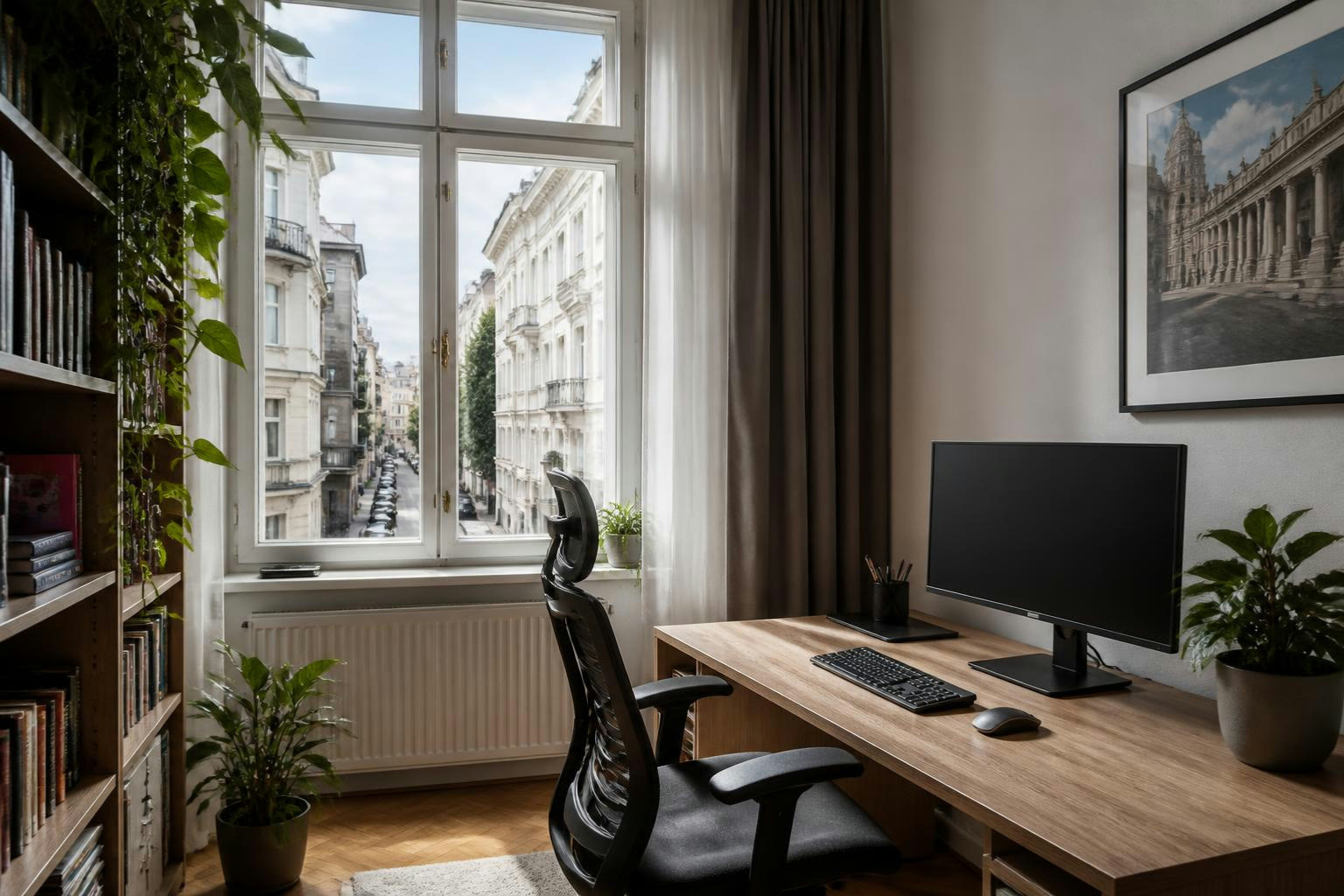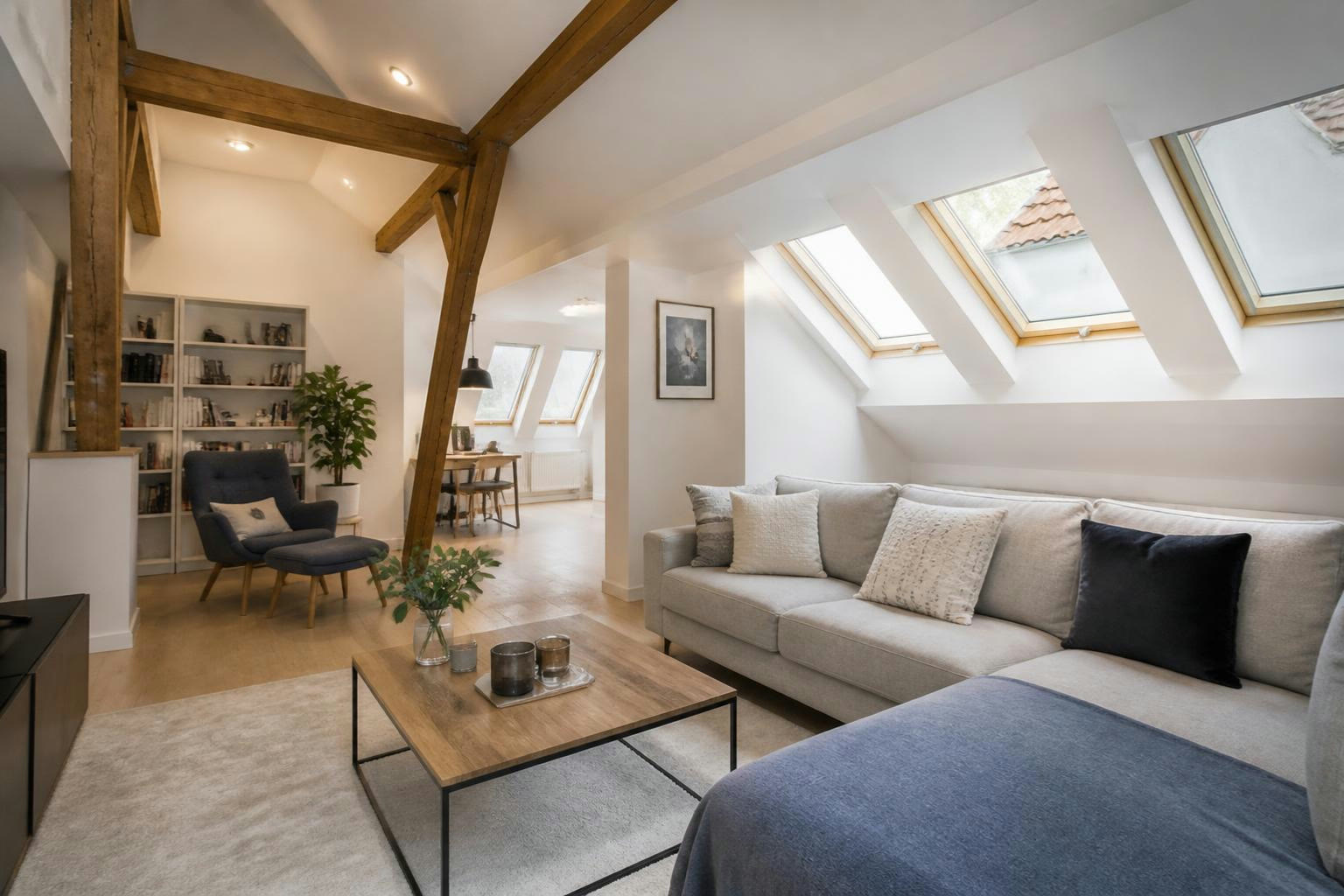

A few years ago, a Budapest flat in good condition practically sold itself. In 2026 the market is more balanced: price growth has slowed, there are more listings, and buyers compare, negotiate and wait for their bank's valuation. If you want to sell well today, you need to prepare the process as well as the flat.
This guide walks through the key decisions: when to sell, how a professional sets the price, which papers to have ready, what to watch in negotiations and how much tax you will pay afterwards. The figures come from Duna House's May 2026 market barometer and the rules currently in force.
When should you sell?
There are three timing questions, and each can be measured in money.
Tax. Income from selling a home is subject to 15% personal income tax, but the taxable share shrinks with each year since you acquired it, and from the fifth year after acquisition it is zero. If you are close to that line, waiting a few months can be worth millions of forints. We show this in a worked example below.
Your next home. If you buy another home after selling, you only pay property transfer tax on the difference between the two values. Since 2026, a sale up to 5 years before the purchase counts (previously 3 years), while for a sale after the purchase you have 1 year. So if you buy first and sell later, you must sell within a year to qualify.
The market. According to Duna House's May 2026 data, 36% of Budapest buyers are buying their first home and 30% are investors. Most first-time buyers use an Otthon Start mortgage, so their needs and the scheme's rules currently have a strong influence on demand.
Price is the most important decision
Most drawn-out sales are caused by overpricing. A high starting price does not "leave room to negotiate"; it puts off the buyers searching in the realistic price bracket, and after a few weeks the flat looks like a stale listing.
Good pricing rests on three things:
- Real comparable sales, not asking prices. Asking prices usually sit above actual sale prices.
- The flat's own features: floor, lift, orientation, ceiling height, condition, balcony, the state of the building and the service charge.
- Buyers' financing limits. In Budapest in 2026 this matters more than ever.
Otthon Start's two key thresholds
An Otthon Start mortgage can only be used for a flat costing no more than HUF 100 million and no more than HUF 1.5 million per m² (balconies and terraces count at 50%). According to the central bank's May 2026 report, around half of all Budapest purchases between September 2025 and February 2026 used this loan.
If your flat is near these limits, pricing matters a great deal. A 68 m² flat at HUF 1.55 million per m² comes to HUF 105.4 million and is above both caps: Otthon Start buyers simply cannot choose it. The same flat at HUF 1.47 million per m² comes to HUF 99.96 million and fits.
According to Duna House's May 2026 data, the average negotiation discount on Budapest brick-built flats was 3–4%, and the average time to sell was 86 days in Buda, 79 in the inner city and 102 in Pest. If your flat has had no serious offer after six to eight weeks, that is usually a pricing signal.
Preparation: the paperwork and the flat
Documents to have ready
- A current title deed and a plan for clearing any charges (mortgage, usufruct, enforcement rights).
- Energy performance certificate. Required for a sale, and the rating must appear in the listing. Under the current government decree, it is valid for five years. According to the financial press, it typically costs HUF 25,000–50,000 for a flat.
- Floor plan, ideally with dimensions. Both buyers and banks ask for one.
- Service-charge statement confirming no arrears, plus the building's deed of foundation and house rules.
- Minutes of owners' meetings from the past two years, the renovation fund balance and any planned works.
- Renovation invoices. These can also reduce your taxable income.
- If there is a mortgage, your bank's statement of the outstanding balance and the redemption process.
You can sell a flat that still has a mortgage on it. The buyer uses part of the price to pay off the loan, the bank issues a release, and the mortgage is removed from the title. Your lawyer sets this out in the contract and payment schedule. Contact your bank in good time.
Preparing the flat
- Fix the small things: a dripping tap, a squeaky door, a dead bulb, a cracked tile. Buyers read small faults as signs of bigger ones.
- Repaint in neutral colours if the walls look tired. It is one of the best-value spends.
- Clear space: personal items, too much furniture and overflowing cupboards make a flat look smaller.
- Light and air: clean windows, every lamp working, curtains open for viewings.
- Professional photos and a floor plan. Buyers decide online whether to view.
Viewings, negotiation, contract
Viewings. Let buyers look around at their own pace, and be ready for questions: service charge, utility bills, planned building works, the neighbours, parking.
Offers. Don't look at the price alone. It matters whether the buyer is paying cash or borrowing, whether they have a mortgage pre-approval and when they want to move in. A slightly lower offer with secure financing can be worth more than a higher one.
The bank's valuation. If the buyer is borrowing, the bank's valuer will also inspect the flat. If they value it below the price, the buyer gets a smaller loan. With Otthon Start, the price and the bank's valuation may differ by no more than 20%. A realistic price reduces this risk too.
The deposit. Under Hungarian law, a deposit (foglaló) is a serious guarantee: if the sale falls through because of the buyer, the seller keeps it; if because of the seller, they must pay back double. As a seller, only accept a deposit when you are certain you want to sell on those terms.
Handover. Set out the exact date, the meter readings and what stays in the flat in the contract.
Tax on the sale, with a worked example
Income from selling a home is the sale price minus the acquisition cost and documented expenses. The taxable share depends on how many years have passed since you acquired it:
| When you sell | Taxable share of the income |
|---|---|
| In the year of acquisition and the following year | 100% |
| In the 2nd year after acquisition | 90% |
| In the 3rd year after acquisition | 60% |
| In the 4th year after acquisition | 30% |
| From the 5th year after acquisition | 0% (tax-free) |
The tax rate is 15%. Deductible items include the purchase price, the transfer tax and legal fees paid on purchase, documented spending on improvements, and the costs of selling (for example the energy certificate, valuation and agency fee). You must declare and pay the tax by 20 May of the following year, and the draft return prepared by the tax authority (NAV) does not include property sales, so you need to add it yourself.
Example. You bought a flat in 2022 for HUF 60 million (HUF 2.4 million transfer tax, HUF 0.4 million legal fees) and renovated it in 2023 for HUF 8 million, with invoices. In 2026 you sell it for HUF 92 million, with HUF 2.5 million of selling costs.
- Income: 92 − 60 − 2.4 − 0.4 − 8 − 2.5 = HUF 18.7 million
- 2026 is the 4th year after acquisition, so 30% is taxable: HUF 5.61 million
- Income tax due (15%): approx. HUF 842,000
- If you sold in 2027: HUF 0
This example is indicative. Inherited or gifted homes follow different rules for the acquisition value, which we always calculate case by case.
Income from a property sale does not appear in the draft return NAV prepares for you. If you accept the draft unchanged, the sale goes undeclared. It is worth declaring even if no tax is due.
If you would like us to handle pricing, marketing and negotiation, our sell page explains how we work. You can follow the Budapest market on our Budapest page, and write to us with any questions.
Frequently asked questions
How long does it take to sell a flat in Budapest?
According to Duna House's May 2026 data, resale brick-built flats sold on average in 79 days (inner city) to 102 days (Pest), and in 86 days in Buda. A well-priced, well-prepared flat sells faster; an overpriced one, much more slowly.
Is it worth renovating before selling?
Small repairs, repainting and decluttering almost always pay off. A full renovation rarely does, because many buyers want to renovate to their own taste, and the spend does not fully show up in the price.
Do I need an energy certificate to sell?
Yes. It is required for a sale, the rating must appear in the listing, and under current rules it is valid for five years.
What if the buyer's bank values the flat lower?
The buyer gets a smaller loan and either adds more of their own money or you renegotiate the price. That is why the contract should set out what happens if the loan is not granted in the planned amount.
This article is general information, not legal or tax advice. Please seek individual advice for your own sale.
Looking to buy or sell in Budapest?
In a 30-minute call we go through what you are looking for, your budget and which districts make sense. In English or Hungarian, with no obligation.
Book a call
Urbán Réka founded Monvero. She works with buyers and investors in Budapest, Dubai and on the Costa del Sol, from setting the budget to signing. This article is for general information; for advice on your own situation, get in touch.