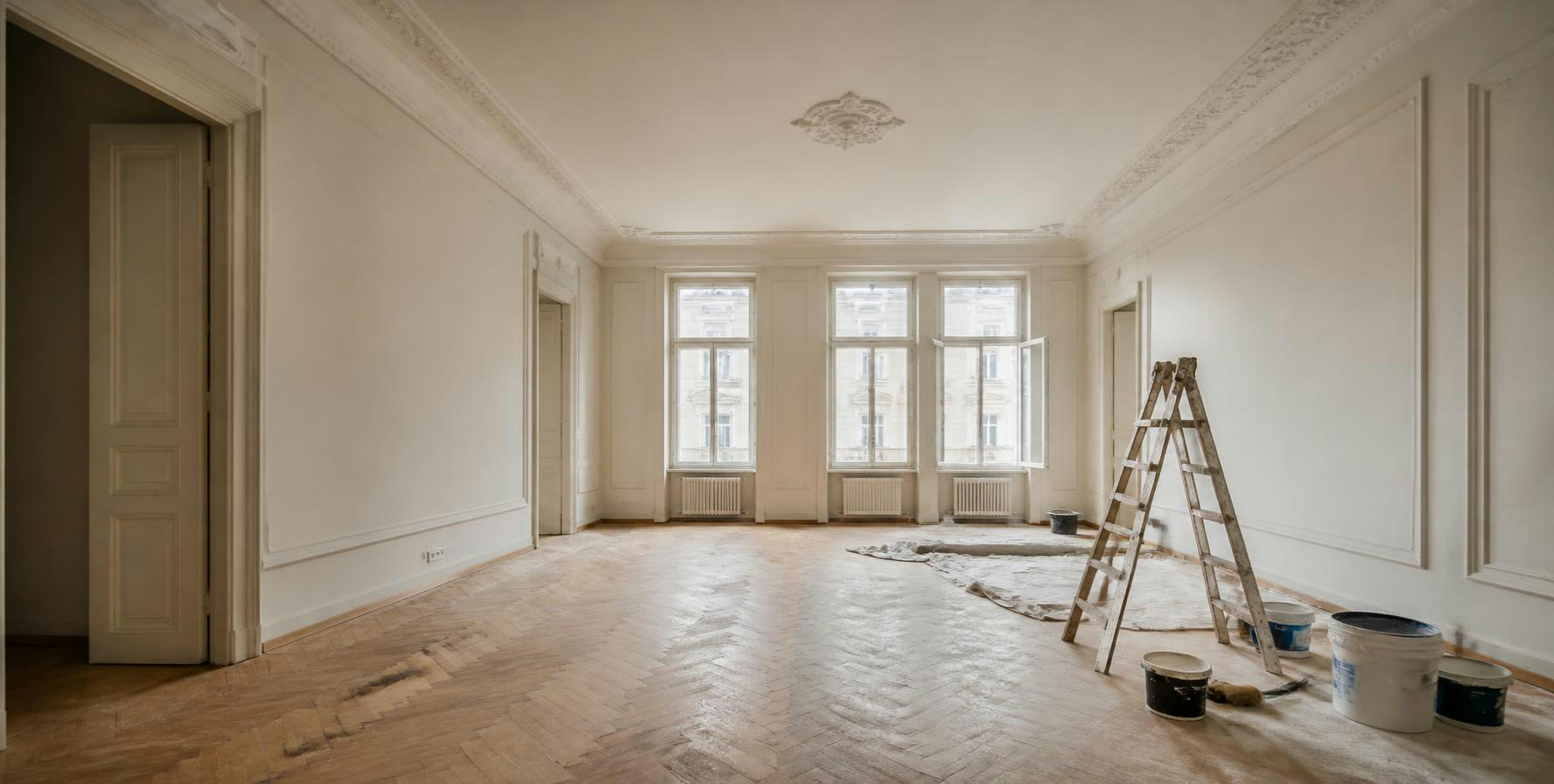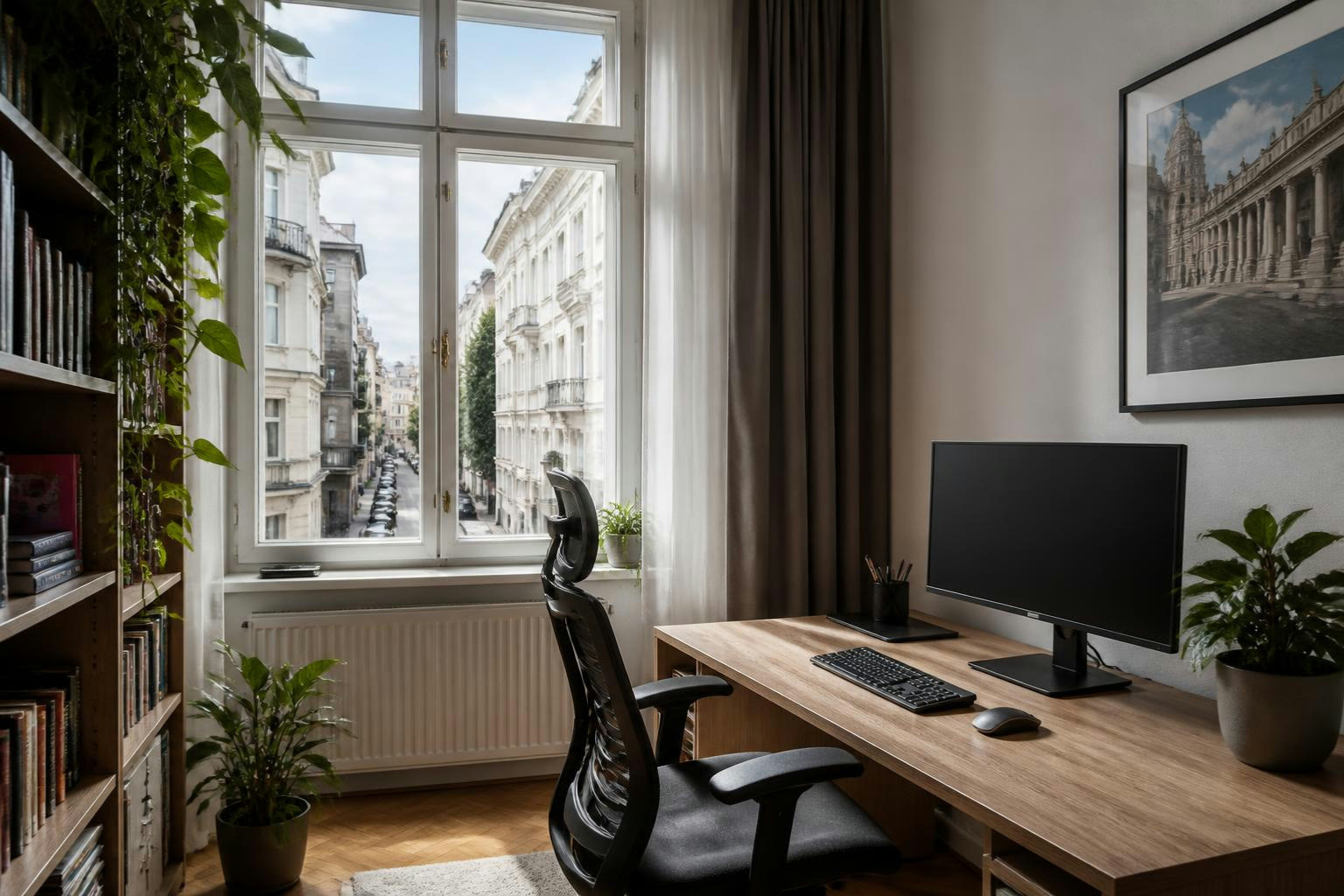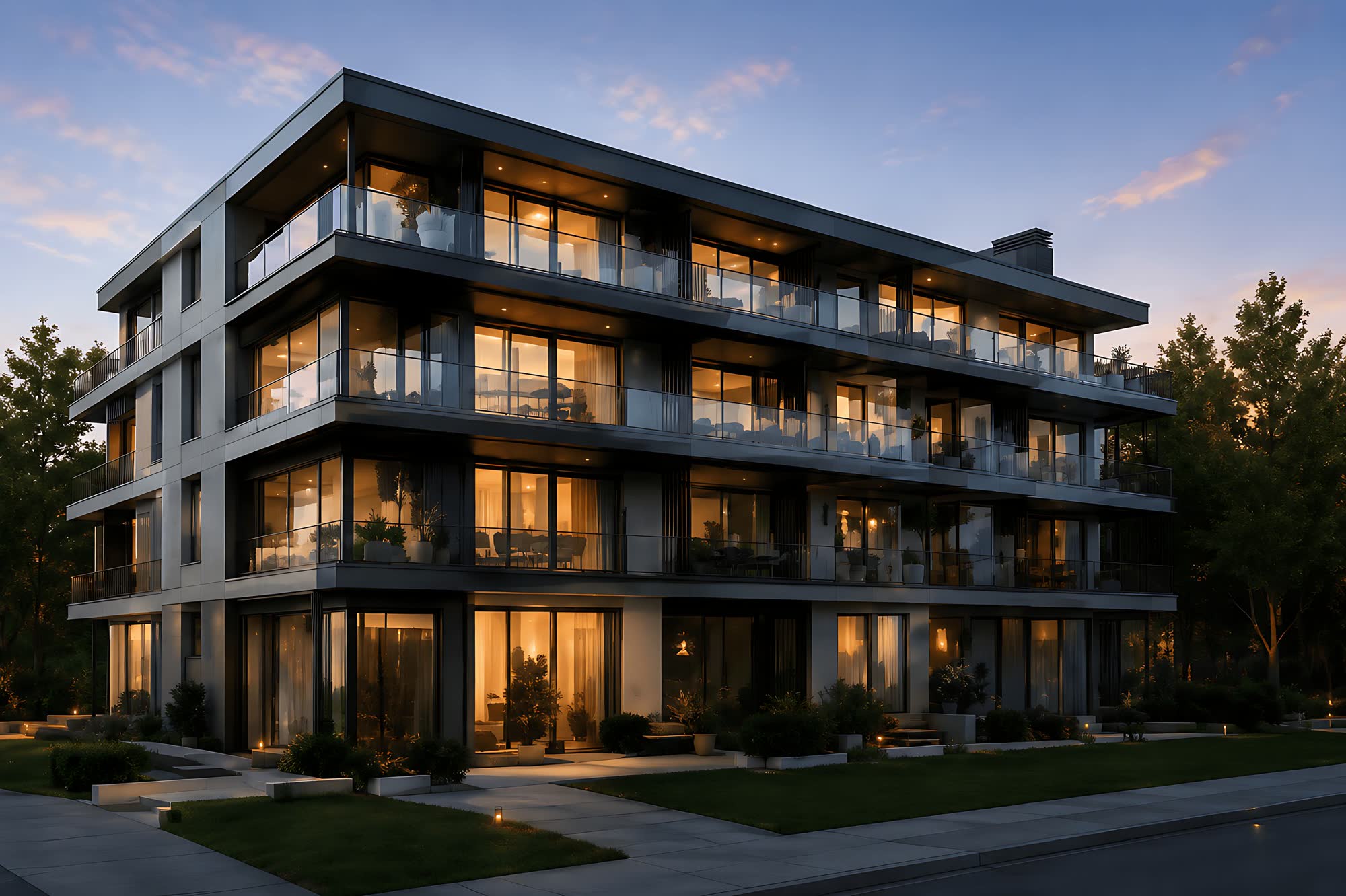

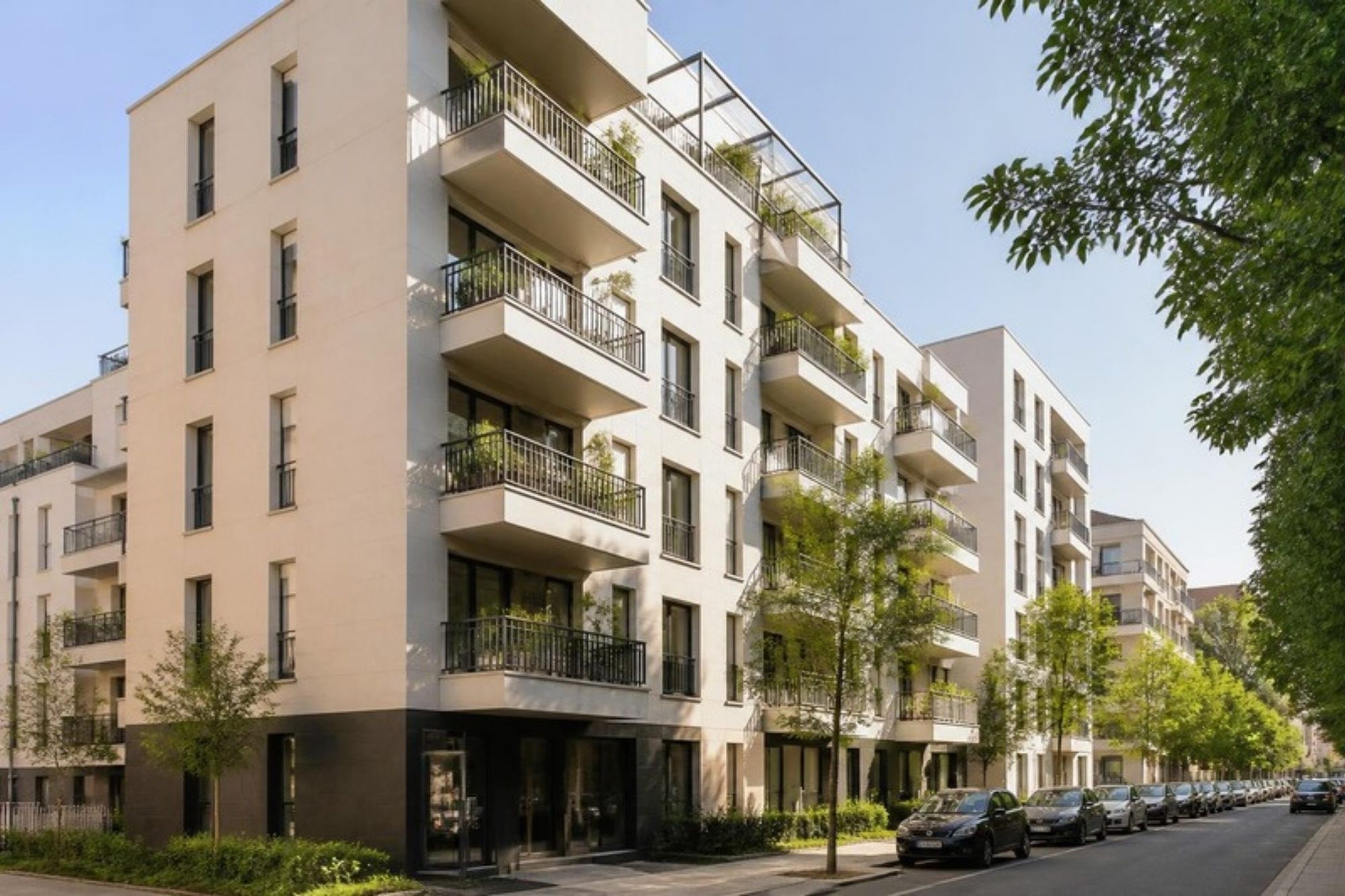
Few questions divide Budapest buyers as much as this one. On one side is the turn-of-the-century apartment house: tall ceilings, large windows, parquet floors, a stone staircase, an inner courtyard and a street that has stood in the same place for a hundred years. On the other is the new build: underground parking, a lift, underfloor heating, low bills and the peace of mind that the bathroom will not need touching for years.
Either can be the right decision if you know what you want from your home. This article does not hand down a verdict. Instead it helps you weigh the two against your own situation: on price, running costs, financing and everyday life.
What does the same money buy?
Price is the most tangible difference. According to Otthon Centrum's first-quarter 2026 analysis, new builds in Budapest had an average asking price of HUF 2.028 million per m². In the inner and Buda districts it is much higher: HUF 3.74 million in District V, 3.7 million in District II and 3.57 million in District XII, against around HUF 2.1 million in Districts III, XI and XIII.
Resale brick-built flats are noticeably cheaper. Duna House data for January 2026 put the average price per m² at HUF 1.45 million in Buda, 1.56 million in the inner city and 1.09 million in Pest.
Here is a concrete example with a HUF 120 million budget in District XIII:
- A period flat in Újlipótváros at around HUF 1.6 million per m²: roughly 75 m², a comfortable two-bedroom, but probably in need of renovation.
- A new build in the district at around HUF 2.1 million per m²: roughly 57 m², ready to move into, though a parking space is usually extra.
So the difference is not only in square metres, but also in what you will spend money on over the coming years.
With a period flat you buy space and location, and you take on the age of the building. With a new build you buy predictability, and get fewer square metres.
The period flat: what you get and what you take on
What you get:
- Space and light. Ceilings of over three metres and large windows are common in old apartment houses, so the same floor area feels much bigger.
- Location. Period buildings stand in the city's best-placed neighbourhoods: Lipótváros, Terézváros, Újlipótváros, the Palace Quarter and, in Buda, Víziváros.
- Character. Stone stairs, wrought-iron railings, original parquet, a tiled stove: things a new building cannot recreate.
- Flexibility. During a renovation the layout can often be adapted to your needs (within the limits of load-bearing walls and the building's rules).
What you take on:
- The building's age. The risers (the vertical water and drainage pipes), roof, floors and façade are all shared costs, and a major renovation by the owners' association can raise your outgoings for years.
- Renovation. Updating the wiring, plumbing and heating in an old flat is often unavoidable. We wrote a detailed guide on it.
- Compromises. Often there is no lift or parking, courtyard-facing flats can be darker, and in buildings with open walkways (the classic "gang") your neighbours are closer.
The new build: what you get and what you take on
What you get:
- Low running costs. Energy requirements for new buildings are far stricter, which means smaller heating and cooling bills.
- Predictability. New systems, new windows, new finishes. Hungarian law sets mandatory minimum service lives for certain building elements, and your rights against the developer are set out in the contract.
- Convenience. A lift, underground parking, storage, often a balcony or terrace, and step-free access.
- Easier financing for energy-efficient homes. Under the central bank's (MNB) rules, since 2025 a 10% deposit may be enough to buy a home rated A+ or better with primary energy demand of no more than 68 kWh/m² a year, and repayments may take up a larger share of income.
What you take on:
- A higher price per m² and a smaller floor area for the same money.
- Lower ceilings and often less distinctive layouts.
- Developer risk if you buy off-plan, before completion: delays, or a specification that differs from what was promised. The developer's track record, the payment schedule and a lawyer's escrow matter a great deal here.
- A changing neighbourhood. Building work around a new development can continue for years, and your view and traffic may change too.
- A community still taking shape. In a new building, the first owners' meetings decide who manages the building, what the service charge will be and which house rules apply. It is worth attending them.
Under current rules, the 5% VAT rate on new homes applies until the end of 2026. Under the transitional rule, homes in projects whose building permit is final by the end of 2026 can still be sold with 5% VAT until the end of 2030. If you are buying new, ask which category the project falls into.
Side by side
| Factor | Period flat | New build |
|---|---|---|
| Price per m² (Budapest, early 2026) | usually lower | around HUF 2m on average, 2.5–3.7m in central districts |
| Ceiling height, sense of space | often over three metres | usually lower |
| Running costs, bills | depends on building and renovation | usually low |
| Risk of shared costs | major building works possible | lower in the first years |
| Parking | rarely available | usually underground, priced separately |
| Renovation need | often required | none for years |
| Otthon Start (HUF 1.5m/m² cap) | often fits | rarely fits in Budapest |
What does this mean for Otthon Start buyers?
The fixed 3% Otthon Start mortgage can be used for homes costing up to HUF 100 million and HUF 1.5 million per m². According to ingatlan.com, the average price per m² of resale flats in Budapest was right at that level in early 2026, around HUF 1.5 million, while new builds averaged well above it. That is why most Otthon Start purchases in Budapest happen on the resale market, and for a first home in the inner districts, a period or older brick-built flat is often the only realistic option.
A viewing checklist for each type
Each type raises different questions. Take these with you to viewings.
For a period flat:
- When were the roof, risers and façade last renovated, and what does the owners' association plan for the next five years?
- What is the renovation fund balance, and are any owners in the building behind on service charges?
- What state are the flat's wiring and plumbing in, and when were they replaced?
- Is there a lift, or one planned, and who would pay for it?
- Is the building protected? That matters for window replacement and façade work.
For a new build:
- What exactly does the specification include (finishes, windows, heating, cooling), and what counts as an extra?
- What do a parking space and a storage unit cost, and are they included in the price?
- What will the service charge be, and who drew up the building's deed of foundation?
- What energy rating does the developer promise, and when will you receive the certificate?
- How does the developer handle defects under warranty, and is there a named contact for it?
Which one suits you?
A period flat is a good choice if:
- location and space matter more to you than parking,
- you have the time and budget for a well-planned renovation,
- you are planning long term and value the building's character.
A new build is the better choice if:
- you want predictable monthly costs and years without renovation,
- you drive, and a lift and underground parking matter to you,
- you want an energy-efficient home, possibly with better mortgage terms.
If both types are on your list, we can help you compare them at viewings. You will find new projects on our new developments page and the current Budapest selection on our properties page.
Frequently asked questions
Which holds its value better?
Both can, if the location is good. For a period flat, the building's condition and how well the owners' association works are decisive. For a new build, what matters is whether the neighbourhood and the quality of the project stay attractive over time.
What should I check in an old building's owners' association?
Ask for the minutes of the last two years' meetings, the balance of the renovation fund and planned works (roof, risers, lift, façade). They show what shared spending lies ahead in the next few years.
Is buying off-plan worth it?
It can be good value, but the risk is higher. Look at the developer's completed projects, the payment schedule, and whether your payments are protected by escrow or another guarantee.
How much lower are the bills in a new build?
That depends mainly on the energy rating, not the building's age. A well-renovated period flat with sealed windows and modern heating can be economical, while a poorly oriented new flat with large glazed areas may need a lot of cooling in summer. Ask for the energy certificate of both flats and, if possible, the last year's utility bills.
Can I use Otthon Start for a new build in Budapest?
Yes, if the price is no more than HUF 100 million and no more than HUF 1.5 million per m². In Budapest that mostly happens with new projects in the outer districts.
Want a second opinion on Budapest?
Bring the listings you have saved, or just your questions. In 30 minutes we show you what to check on price, condition and paperwork.
Let's talk
Zelina Gréta is a property advisor at Monvero. She helps with searches, viewings and getting sellers ready for the market. This article is for general information; for advice on your own situation, get in touch.